 Review by-Jarrett Leahy
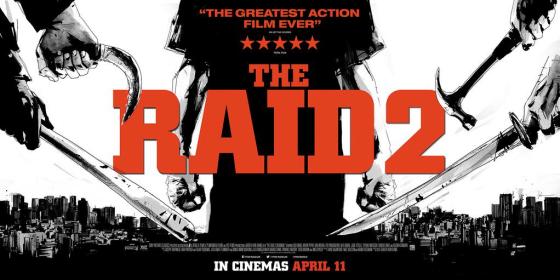
After barely escaping with his life following the first raid, rookie police officer Rama reluctantly agrees, in exchange for protection of his wife and family, to join a special police force charged with taking down the crime syndicates and corrupt officers plaguing the streets of Jakarta. Sent undercover in one of city’s worst prisons, Rama befriends Uco, the son of crime lord Bangun. As Rama gets deeper into this underworld of corruption and greed, he discovers that Uco’s insatiable desire for respect and power has put him on a path of destruction and betrayal that threatens the tenuous peace accord these powerful crime cartels have been living under.
 If I were to ask you to think of the place that you would consider to be a hotbed for kung fu cinema, I would imagine that very few of you would you chose Indonesia. And how would react if I told you that a 6’7” Welshman from the UK is currently the master of Kung-fu genre? As unlikely as both of those scenarios are, in less than five years, writer/director Gareth Evans has combined his incredible talents as a filmmaker with those offered by a plethora of skilled martial artists he discovered during his time in Indonesia, to give us two of the most ferocious and energetic additions to the action genre.
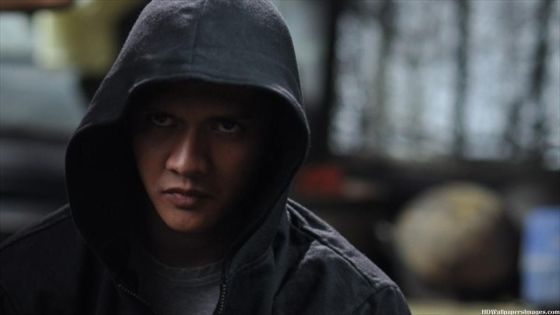
 Iko Uwais, a thirty one-year-old, former Indonesian martial arts National Champion, was discovered by Evans back in 2007 when he visited Iko’s martial arts school while film the documentary, The Mystic Arts of Indonesia: Pencak Silat. Impressed with the immense talents Iko possessed, Evans convinced Uwais to come work for him and his movie production company as an actor, stuntman, and fight choreographer. After mild success starring in Evans’ 2009 film, Merantau, Uwais and his incredible martial arts skills were thrust into the spotlight with the unexpected success of the first Raid film upon its release back in 2011. Reprising his role of Rama, The Raid 2 is yet another forum to highlight Uwais’ impressive artistry. Like a professional dancer whose partners are knives and bats, Uwais’ speed and kinesthetic control rivals that of any of his martial arts predecessors. After the critical success of this latest effort, I foresee Uwais becoming the next great Asian action star.
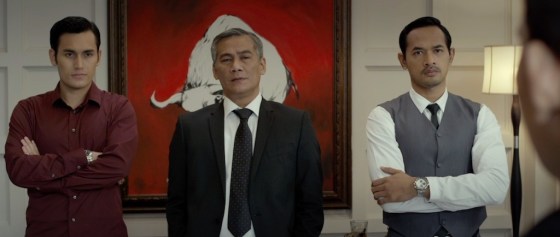
 Even with prior knowledge and experience with the first film, I must admit at times it was a bit difficult to keep all the warring parties and alliances straight. Surprisingly however, I found this only added to my enjoyment of the film because it forced me to pay closer attention to film’s narrative instead of just the action sequences. While trying to describe the general gist of the film to Jason, I texted this Godfather comparison that I think may help some better understand the dynamic of the film’s betrayal (if you don’t have any experience with The Godfather, please bare with me for a moment). Imagine Fredo Corleone joining forces with Virgil Sollozzo to start an inter-family war and attempt a coup de grace on Don Vito, and then add a mole cop and bunch of bloody kung fu action.
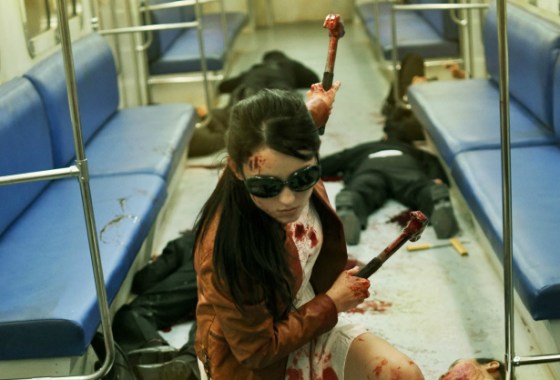
 My praise and recommendation of The Raid 2 comes with a very stern admonition: this film is not for the faint of heart. The level and intensity of the violence depicted is some the most extreme and graphically severe you’ll see on screen. Blood, guts, limbs snapped, and that’s only the first two hours. The last 25 minutes unleashes an even more fierce climax with physical encounters that far exceed what would normally be deemed humanly possible. This movie makes the violence depicted in say Tarantino’s Kill Bill feel like an entertaining stroll through the park.
 With that warning out of the way, in the confines of the Kung fu genre of action films, filmmaker Gareth Evans did the near impossible, skillfully crafting an intricately detailed ballet of carnage and mayhem that not only adds to cult status of his first effort, but far exceeds it by leaps and bounds. The original The Raid sacrificed some of its plot diversity and complexity in order to deliver an unrelenting action extravaganza that dazzled the eyes. With The Raid 2, Evans built on the limited storyline of the first film, evolving and unleashing an entertainingly multi-layered underworld story involving multiple crime families and unthinkable betrayal brought on by the hunger for power. This deft combination of story and action makes The Raid 2 a much more hair-raising and rousing spectacle that, by the end, will leave you in an awed state of amazement.-JL
 Review by-Jarrett Leahy
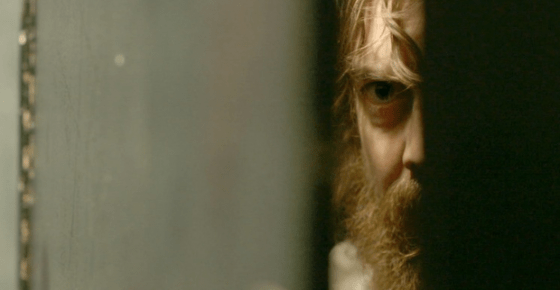
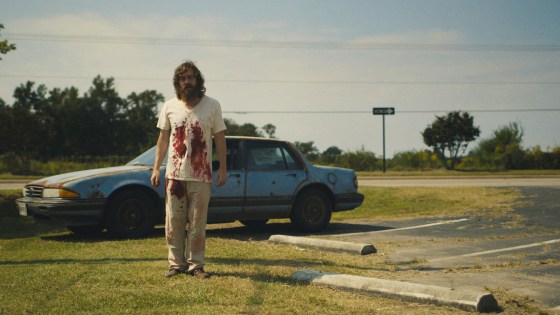 Of the many duties he deftly carried out for the film, Saulnier’s most gifted contribution was his hauntingly alluring cinematography. There were numerous times were I found myself responding to a certain shot or particular camera angle with awed wonderment. The foreboding and dreamlike atmosphere during Dwight’s car ride through the foggy Virginia mountains felt almost hallucinatory. And in the film’s most exceptional visual sequence, the pivotal bar bathroom scene, Saulnier utilizes flawless closeups to capture, through a crack in the stall Dwight is hiding in, the sheer fury and terror on his face as he peers out at Wade Cleland, the man he’s abhorred for so many years. The next shot is even more amazing as the camera, now looking in the opposite direction through the same crack, catches Wade, peering into the bathroom mirror, as he notices Dwight staring at him from the stall. These two shots alone told me I was in the presence of a filmmaker with a true gift and knowledge on camera placement.
 Saulnier’s undeterred decision to cast his best friend and filmmaking partner, Macon Blair, as his lead for the film was an honorable and quite perceptive decision. Blair, who could pass for the offspring of Nathan Lane (if Lane was into that sort of thing) offers an acquiescent, unsuspecting delivery that creates a character that you wouldn’t normally suspect for this type of role. Through Blair’s deft and wary facial expressions and body language, we recognize, without needing the film to tell us, that this is a fragile yet intelligent man whose vagabond situation was most likely brought about by his harrowing past that still haunts him. Despite his limited acting credits, Blair expertly captures the pain, rage, and fear that would drive a man to such a desperate act of pure vengeance.
 The fact that Blue Ruin was even completed is an incredible example of the faith this filmmaker and friends and family had in his talents and the story he so desperately wanted to tell. Saulnier and his wife re-financed their house, cashed out their retirement plans, borrowed money from family members, and even raised over $37,000 in a crowdfunding campaign on Kickstarter.com in order to procure enough funding for the movie’s completion. All of this effort paid off as Blue Ruin was selected to premiere at the 2013 Cannes Film Festival. For me, supporting that kind of unbridled determination from a filmmaker to make his vision a reality is a no-brainer, especially when the end creation is as skillfully accomplished as this thriller turned out to be.
 Review by-Jarrett Leahy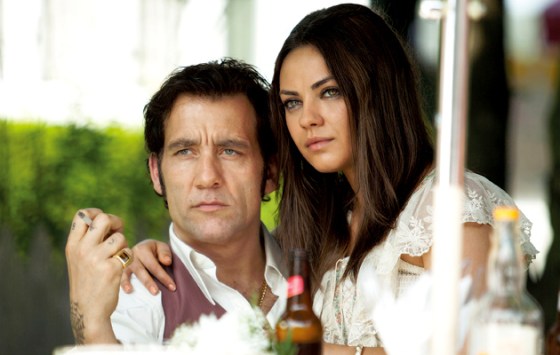
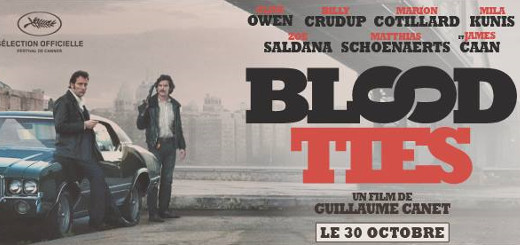
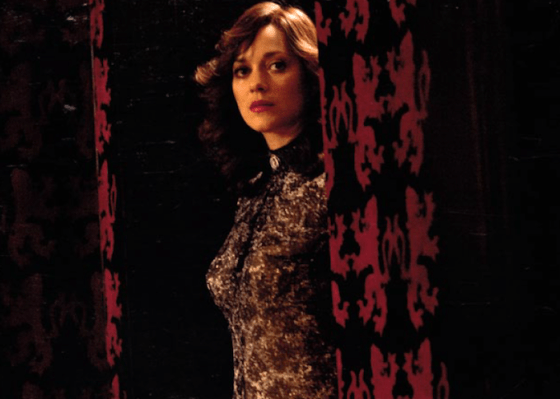 Blood Ties is the perfect example of the tumultuous state of affairs the current movie landscape is in. It’s fairly obvious that movie executives have no scruples in releasing and promoting absolute garbage entertainment, and that is their right. But it also makes me question how a relatively standard, by no means awful crime drama with a cast lead by Clive Owen, Marion Cotillard, and Billy Crudup and also starring Mila Kunis, Zoe Saldana, James Caan, and Lily Taylor gets practically ignored by its US distributors Roadside and Lionsgate. This film deserved a better chance at finding a wider audience than it eventually got here in the States.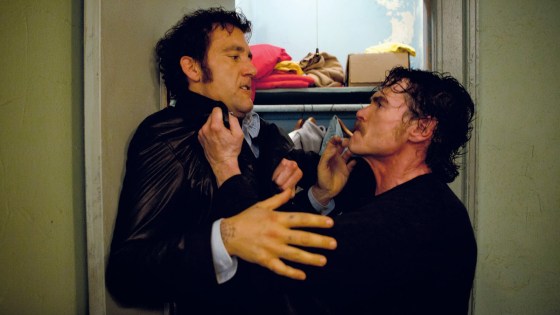




 Review by-Jarrett Leahy
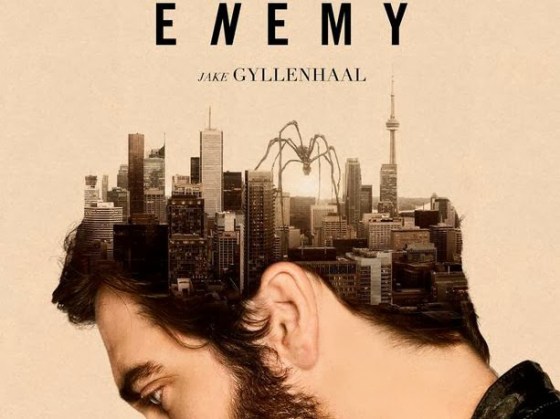
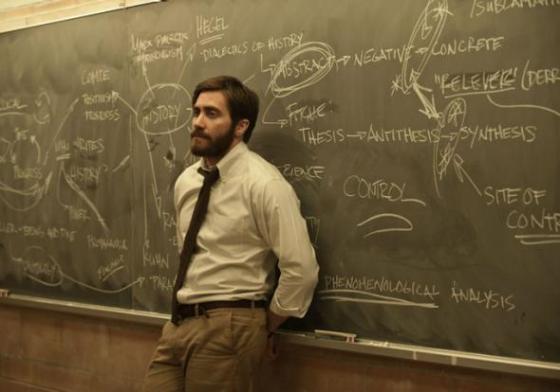
 Over last decade, Jake Gyllenhaal has become one of the most taken for granted actors of his generation. While other movie stars have been coasting on the latest big budget, superhero craze, Gyllenhaal has expanded his range, taking chances on riskier, more rewarding projects like Brokeback Mountain, Zodiac, Brothers, Source Code, End of Watch, and Prisoners. Despite being released after Prisoners, Enemy is in fact the first collaboration between Gyllenhaal and Villeneuve. Asked to play not one, but two emotionally convoluted characters, Enemy is yet another example of Gyllenhaal’s ever-expanding commitment to selecting challenging roles. Through the use subtle changes in inflection along with variations in gestures and body language, Gyllenhaal is able to expertly differentiate the unique personalities of these two identical characters.
 Throughout the movie, we are keenly made aware of the mental anguish both of these men are struggling with through Villeneuve’s repeated use the off-putting image of the spider. One can be seen during the illicit, underground erotic show depicted early in the film, another is seen in a dream sequence that portrays a naked female body with a grotesque spider’s head. Even images like the trolley car cables and shattered glass were designed and filmed to give the shrouded appearance of a spider web. Similar to the way they deceive and ensnare their prey, the spider becomes a type of symbolic representation of the perceived trappings of the relationships these men are in.
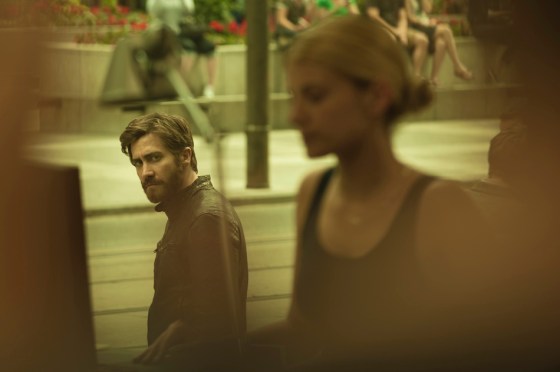 The film’s most powerful brilliance, its ambiguity, may also be its ultimate downfall in some peoples’ eyes. As the film unfolds, questions begin to arise as to whether these are in fact two separate men or one man who is having a break with reality. Why does Adam have a torn picture that later shows up in Anthony’s apartment? And why did Adam’s mother tell him to quit that fantasy of being a third rate actor? (which is in fact Anthony’s dream). Interpretations and conspiracy theories have already begun popping up on various movie fan boards, each one more detailed and elaborately entertaining than the last and some laying out pretty compelling arguments that in fact there may be only one man. When questioned about the equivocalness surrounding Enemy, Villeneuve simply stated that he wanted to keep the ambiguity of it intact so that the film remained open to interpretation.
 This has been one of my most difficult reviews to write, not only because the movie’s complexities and prevarications, but because of an immense desire to adequately capture my admiration and wonderment for this film. An esoteric example of experimental, art house horror, Enemy is advanced viewing that some just simply won’t appreciate. Having now watched the movie three times in less than a week, I can honestly say it is a film that you can explore repeatedly and discover new clues with each viewing. Some may find the unresolved ambiguity of films like this to be a frustrating experience. I personally found Enemy to be one of the most hauntingly fascinating and intoxicatingly thought-provoking films of the first half of 2014.
 AmateurCinephile.com