Lone Survivor (2013)
Review by-Jarrett Leahy
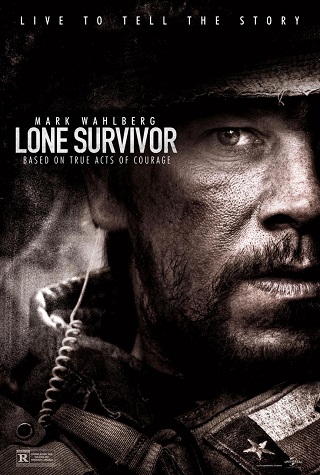
Based on the best selling book of the same name, Peter Berg’s Lone Survivor tells the harrowing account of the 2005 Navy Seal mission to capture infamous Al Qaeda leader Ahmad Shah. When the operation becomes compromised, the four man team, deep behind enemy lines, is thrust into a savage battle for their lives.
Normally a war film with cast that includes Mark Wahlberg, Ben Foster, Emile Hirsch and Eric Bana would be a no-brainer blockbuster. But initial reactions to the movie’s trailers were mixed, with some (including myself) concerned that what was being shown felt more like a U.S. military recruiting video than an actual movie. However, for those who may still have personal trepidations, hopefully I can ease those concerns by saying Lone Survivor is an impressive war film that remains true to its genre roots.
The reality of the world we live in is we are still in conflict with the combatants depicted in this film. But director Peter Berg makes a conscious decision to avoid delving into the politics that surround this mission, instead highlighting the camaraderie and brotherhood shared between these men even under the most dire of circumstances. Like many other successful war films, Berg attempts to immerse the viewer as accurately as possible, in what it was like to be one of those soldiers under fire. With bullets, RPGs and explosions coming from, what at times feels like every direction, the battle violence depicted is some of the most unrelenting and graphic shown in recent memory, although at no point did I ever feel it being exploitative or an over-exaggeration for the effect.
The star studded cast doesn’t disappoint, with many of the film’s lead actors are no stranger to military films. Wahlberg’s previous efforts includes a headlining role in David O’ Russell’s Three Kings, Ben Foster played a Casualty Notification officer in The Messenger, Eric Bana was part of the impressive cast of Black Hawk Down, and Taylor Kitsch starred in Peter Berg’s 2012 directorial effort, Battleship. Throw in the ever-talented Emile Hirsch (Into the Wild, Milk) and you have a group of actors with the skillset and range to capture on film the emotional highs and lows brought on by combat.
While I recommend caution to some of the more squeamish viewers, for action fans and war film connoisseurs, Lone Survivor is a definite must watch. What Berg manages to capture on film is one of the most intense and graphic depictions of modern warfare since Ridley Scott’s 2001 classic, Black Hawk Down.
Grade: B+
Oh, and don’t forget to visit my Poll Questions page to cast your vote on which Mark Wahlberg performance is his best…
Top 6 List-Philip Seymour Hoffman
List by-Jarrett Leahy
Excluding Daniel Day Lewis and Tom Hanks, there may be no finer actor over the last 25 years than Philip Seymour Hoffman. A thespian with a chameleonic ability to flawlessly float between strong leading roles and equally impressive supporting performances, Hoffman’s impact on popular film can’t be understated. All personal favorites, these 6 films contain both lead and supporting roles, each unique in their own right.
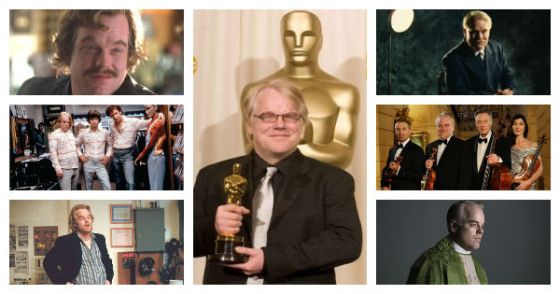
6. Doubt (2008)-A Catholic school principal becomes suspicious of a priest’s personal relationship with a troubled youth. Certainly not your typical recipe for a entertaining drama, but team up Philip Seymour Hoffman with Meryl Streep and Amy Adams and you get a tense and riveting melodrama that keeps you guessing about the priest’s innocence/guilt all the way to the end.
5. A Late Quartet (2012)-The inclusion of this film over many other great choices may leave a few scratching their heads. But my love for this sublime hidden gem of 2012 only grows with each viewing. Hoffman, Catherine Keener, Christopher Walken and Mark Ivanir have such innate on-screen chemistry that it is completely believable they are a world-renowned string quartet who has been together for 25 years. Give this one a chance if you ever come across it.
4. The Master (2012)-There may be no more fruitful actor/director pairing in the last two decades than Philip Seymour Hoffman and Paul Thomas Anderson. Of the six feature length films PT Anderson has made, Hoffman has been in five, and The Master is the first that allows him to truly show off his lead acting skills. A performance that required a perfect mixture of pomp, class & a little explosive anger, there is truly no one I can picture playing Lancaster Dodd better than Hoffman.
3. Punch-Drunk Love (2002)-The second of three Hoffman/P.T. Anderson collaborations on my list, Punch-Drunk Love has a sense of humor that can politely be described as acquired taste for some, and while this unusually quirky love story is primarily the vessel to show the world what Adam Sandler could have been if he actually gave a shit, I just can’t ignore Hoffman’s sleaze-tasticly crooked mattress salesman Dean Trumbell or the eventual showdown that comes between Trumbell and Sandler’s Barry Egan.
2. Boogie Nights (1997)-The Hoffman/Anderson relationship has resulted in some pretty memorable on-screen characters, but none show off Hoffman’s uniquely gifted acting range more than Scotty J. Awkward and overweight, Scotty J is a porn shoot film assistant/audio man who desperately wants to be just one of the guys despite a not so secret crust on the new fresh faced star. The sign of a great supporting actor is being able to make everyone around him better, and no one in Boogie Nights does that as well as Hoffman.
1. Almost Famous (2000)-Reportedly Hoffman only had a four day window to film all his scenes for the film, during which he was sick with the flu. His depiction of Lester Bangs shows no signs of him being under the weather, as his portrayal jumps from the screen, exuding the over-hyper excitement of the “world’s most famous rock critic.” No one could ever accuse me of being understated when it comes to my love for this film, and Hoffman’s contribution, though small in screen time, is by far one of the most important to the lasting success of this cinematic love letter to 1970’s rock ‘n roll.-JL
Her (2013)
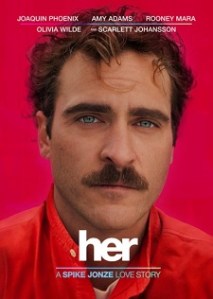
Review by-Jarrett Leahy
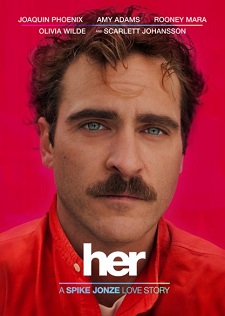
For a large number of film fans and critics, the “game changing” science fiction film of 2013 was and always will be Alfonso Cuaron’s 3D spectacle, Gravity. However for my cinematic tastes, no film made more original or creative strides in the science fiction genre than this beautifully quirky little romance story between a lonely writer and his newly acquired A.I. operating system.
Theodore Twombly (Joaquin Phoenix) is a gifted writer who is employed to create beautifully expressive and personal letters for complete strangers. I found this to be an ingeniously subtle and prescient social commentary; our future society, having lost so much of the ability for actual person to person interaction, has to hire someone else to write their love letters for them. Lonely and on the verge of divorce from his estranged wife (Rooney Mara), Theodore purchases the latest computer operating system (OS1) which is touted as “It’s not just an operating system, it’s a consciousness.” Here we meet Samantha (Scarlett Johansson) a highly intuitive and interactive artificial intelligence. Through many personal and intimate conversations, Theodore begins to see Samantha as more than an OS; she evolves into a trusted confidant and an intimate relationship develops between the two of them.
When it comes to writing unique and original material, writer/director Spike Jonze is simply on another level. Many fellow movie fans have expressed their adoration for the love story aspect of Her. With it being the overt storyline of the film I don’t want anyone to feel like I’m ignoring or attempting to downplay it’s significance or the questions it raises about what is consciousness and what it means to be human. But for me, what was even more significant was Jonze’s awe inspiring ability to put on film one of the most remarkable and innovative representations of what artificial intelligence may look like for us in the not so distant future. Avoiding many of the cliches about how computers will attempt to take over the world, instead Jonze shows us an A.I. with complex emotions—a Being who is ever evolving and is struggling to come up with answers to its own unexpected and rapidly expanding growth. Listening to Samantha’s voice, I could truly sense the confusion and frustration of not being able to explain to Theodore what was happening to her (a testament to the skill that Johansson brought to her unique performance).
I am very self-conscious about giving too much of a movie’s plot away, but there is an underlying aspect to Her I must explore. I couldn’t help but see similar comparisons to the science fiction film all others are now compared to, Stanley Kubrick’s 2001: A Space Odyssey. In the final act of 2001, Kubrick predicts humans’ next possible evolutionary advance with his depiction of the Starchild, a type of transcendental entity that can traverse into the dark reaches of our universe. Where I saw Jonze’s film differing only slightly from that idea is, instead of humans evolving into a Starchild type life form, perhaps instead it will be one of our most impressive creations, Artificial Intelligence that actually evolves beyond a realm we can comprehend. All laws of probability show that there’s a pretty good chance we won’t survive as a species. But what if we were able to create a type of transcendental Being that was able to live on long after we are gone? In that thought, I found a bit of hope in the ending of the film.
It pains me that such a smart and thought provoking movie like Her probably won’t reach a wider audience before it leaves theaters. Instead, retread films like Ride Along and I, Frankenstein will continue to dumb down the expectations of the average film-goer. But I suspect long after many of those throw-away films will have thankfully been forgotten, we will still be discussing the impact Her had on filmmakers and true fans of cinema.-JL
 AmateurCinephile.com