 Review by-Jarrett Leahy
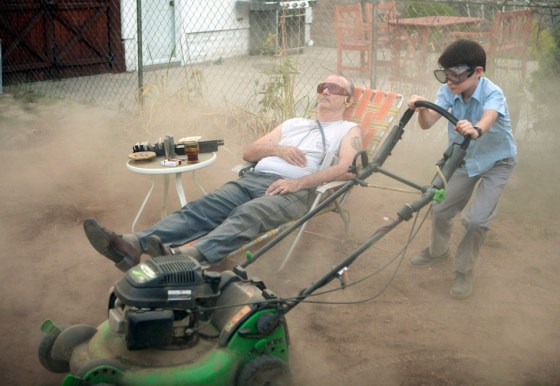
When Maggie, a recent divorcee, and her 12-year-old son, Oliver, move in next door to Vincent, a drunkard war veteran with a propensity for betting on the horses, Vincent’s inebriated existence gets thrown for a loop. Unaware of Vincent’s proclivity for life’s questionable comforts and desperate for babysitting help, Maggie agrees to pay Vincent to watch Oliver after school while she’s at work. As this unlikely companionship between Vincent and Oliver flourishes, each helps the other discover life’s finer pleasures while traversing through some of life’s more difficult moments.
 Successful directorial debuts have always held an extra level of intrigue and acclaim, as creating an entertaining movie is hard enough for veteran filmmakers let alone for an artist who is attempting one for the first time. Learning after the fact that St. Vincent is the feature debut of writer/director Theodore Melfi was the cherry on top of an already charming sundae. A longtime producer, Melfi’s film is the type of movie that some critics have been lukewarm in their praise of, due in large part to a script that, some feel, is wrought with an overabundance of conventional indie narrative elements. Critics like to condescendingly call movies like St. Vincent “fan favorites.” While I will concede St. Vincent’s story has a feeling of familiarity, it’s delivered with such hilarity and sincere charisma by all involved that you can’t help but walk out of the theater smiling.
 A celebrated comedian who has flawlessly grown and transformed over his forty year career, Bill Murrray is still one of this generation’s underrated performers in terms of just how gifted an overall actor he is. Playing the film’s title character, Murray delivers yet another noteworthy portrayal in a career replete with them. Right from the film’s opening moments, Murray’s ornery elocution is delivered with a bit of a twinkle in his eye, as if revealing the slightest glimpse of a gentler disposition long since buried over time. Titling the film St. Vincent is an amusing paradox, for rarely would an antisocial alcoholic who retains a “friendship” with a pregnant Russian exotic dancer be anyone’s first choice for sainthood. However, contrary to what the character would want everyone to believe, this cantankerous drunken misanthrope is not all bluster and foul language, and as his relationship with young Oliver grows, we discover a myriad of unexpected surprises about Vincent delivered to perfection by Murray. Comedic roles like this tend to receive early praise yet get overlooked come Oscar time, but it’s my sincere hope this year will prove differently.
 Murray’s onscreen partner in crime, Jaeden Lieberher, is undoubtedly St. Vincent’s breakout star. For many child actors, we tend to cut them some slack due to their obvious lack the experience and expertise. This is not the case with Lieberher. A composed and confident young man who is mature well beyond his years, Lieberher’s elocution and grasp of comedic timing is even more impressive when considering St. Vincent is his film debut. Perfectly cast to portray the scrawny, precocious preteen Oliver, Lieberher captures the discomfiture that comes from being the new kid in school without ever eliciting feelings of pity. While onscreen together, Lieberher and Murray make a truly delightful partnership thanks in large part to Lieberer, who not only holds his own with this screen legend, but delivers his own side-splitting one-liners and amusing moments of acumen.
 As essential as Murray and Lieberher’s onscreen chemistry was to the success of the film, the glue that binds St. Vincent together comes from film’s two supporting female performances. A comedienne known more for portraying brash, foul-mouthed characters, Melissa McCarthy has been a performer I’ve been an admitted skeptic of these last few years. With that in mind, I can humbly declare being pleasantly surprised by her loving and warmhearted portrayal of Oliver’s mother Maggie. Offered with just the right touch of subtle and understated humor, I now have a McCarthy performance I can applaud. In contrast, Naomi Watts’ exaggerated portrayal of Russian exotic dancer Daka is anything but subtle. Amusingly over-the-top and completely against type, Watts goes all out, fully embracing the absurdity of her character to priceless results.
 Like a favorite pair of well-worn shoes, St. Vincent is a comfortable and satisfying story with a multitude of charmingly familiar moments which, left in the hands of lesser talent, would most likely come off as hokey and cliched. Instead, the on-screen pairing of Murray and Lieberher helps create a mischievous coming-of-age comedy enhanced by a smattering of truly affecting narrative curveballs that offer a more emotionally profound experience than one would expect based on the film’s trailer. Some may find the St. Vincent’s ending a bit too sentimental, but for me, Melfi’s affectionate culmination added true heart to his irreverently amusing comedy. When your directorial debut winds up being one of the best comedies of 2014, Theodore Melfi has certainly set the bar of expectation pretty high for his next effort.-JL
 JARRETT LEAHY’S 1994 TOP 10 LIST: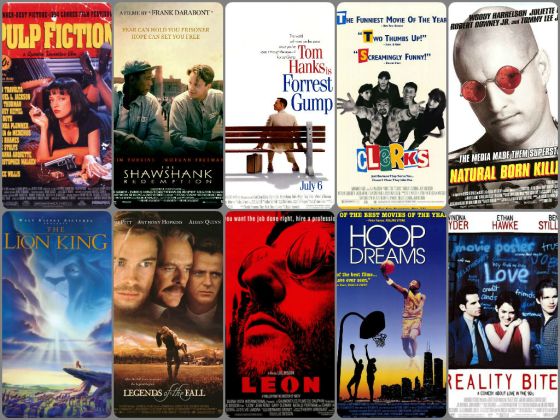

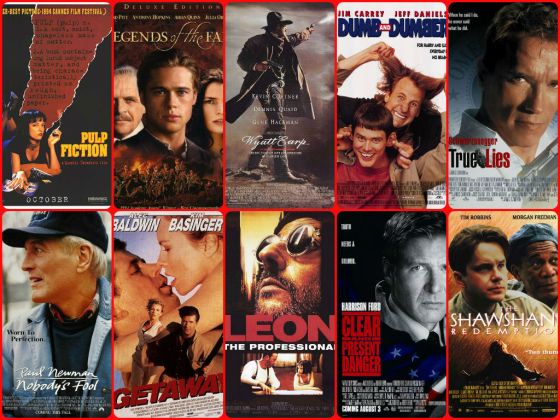

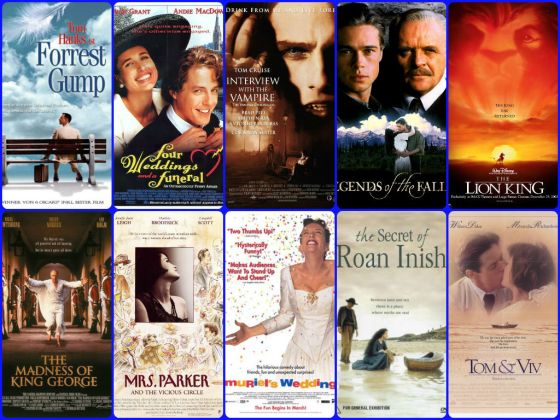 (Unable to select which one deserved her #1 spot, Michelle kept her list alphabetized)
 Today, AmateurCinephile.com hit 3,000 page hits and our country total has reached 69. We just want to thank our loyal visitors for continuing to stop by and checking out what’s new on the site. As Oscar season comes upon us, it’s my hope we can hit 4,000 views before the new year. Happy viewing everyone.-JL
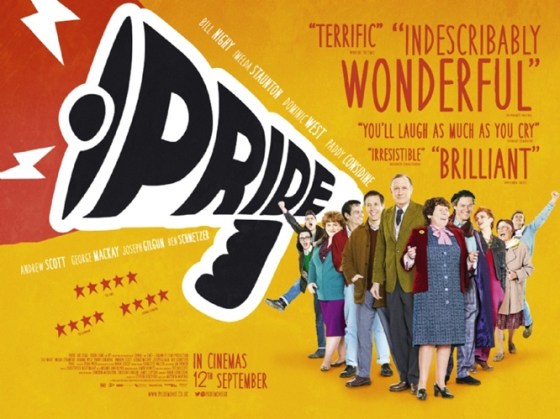 Review by-Jarrett Leahy
 A prolific Broadway director who was awarded the 2009 Best Director of a Play Tony for God of Carnage, Matthew Warchus has only twice ventured into the world of feature films. His 1999 directorial debut, Simpatico starring Jeff Bridges, Nick Nolte, and Sharon Stone, was panned by both critics and movie fans including famed film writer Roger Ebert who described the film as “a long slog through perplexities and complexities.” After a fifteen-year hiatus, Warchus has reemerged a far more confident and capable filmmaker, teaming up with first-time screenwriter Stephen Beresford to adeptly bring this engrossing true story to the big screen. Reminiscent of a Richard Curtis film (Love Actually, Pirate Radio), Beresford’s perceptive script is chock-full of comedic banter that skillfully avoids coming off as too sentimental or schmaltzy. Overall, Warchus has thoughtfully brought to light a gratifying story of benevolence and friendship.
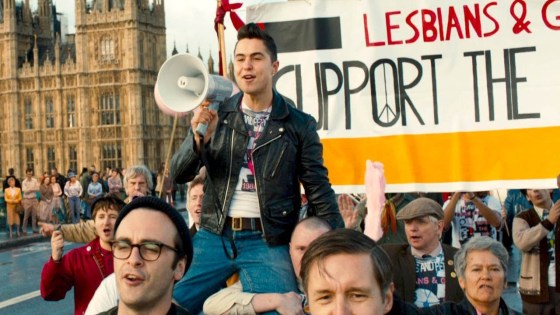 Describing the film’s cast as exceptional would be an understatement. A perfect blend of veteran stars and talented fresh faces, Pride showcases the immense talents of the British acting community. Among the group of young up-and-comers, however, it is American-born actor, Ben Schnetzer, who stands head and shoulders above the rest. A native New Yorker blessed with a gift for authentic British dialect, Schnetzer fearlessly embodies the brazen outspokenness of LGSM leader, Mark. At only age 24, Schnetzer, who also impressed in last year’s WWII drama, The Book Thief, has displayed true star-in-the-making talents. Another of the film’s budding performers, George MacKay, captures the wide-eyed innocence of Pride’s unlikely protagonist, Joe, a sheltered young man who is beginning to discover unknown truths about himself. Together, these two, along with the superbly cast Dominic West, lead an amusing mixture of societal outcasts attempting to aid their fellow brothers in their arduous fight against the Thatcherian establishment.
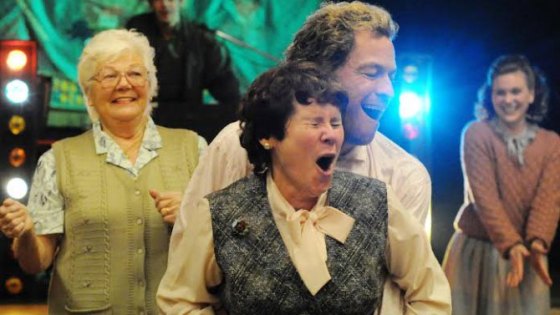 The ensemble of Welsh townspeople is brimming with a who’s who of seasoned British thespians. Oscar-nominated Imelda Staunton (Vera Drake) offers a resolute and amusing portrayal as town leader, Hefina. Joining Staunton is British star Paddy Considine, an actor known more for playing unconventional, rough-and-tumble characters. In his portrayal of Dai, the town representative sent to meet with the LGSM group, Considine brings a genuine warmth and goodness that shines greatest when he’s asked to address of a group of gay bar patrons. While a bit hesitant, it is Dai who first sees the true goodwill and generosity these young men and women are offering and accepts their kindness with gratitude. Remarkably though, the performer who surprised me most was long-time actor Bill Nighy. Seeing Nighy’s name in the opening credits, I fully expected him to play some amusingly irreverent version of…Bill Nighy. Instead, I was charmed by how lovingly toned down his portrayal was. Reserved and painfully soft-spoken, Nighy’s character Cliff is a gentle man who finds an unexpected level of reinvigoration thanks to the infusion of these philanthropic young people. While I’m not sure if Oscar buzz is in Nighy’s near future, it was a true pleasure to see a performance unlike anything I’ve seen from him before.
 Over the last century, cinema has been one of the most successful art forms to help encourage compassion and understanding of different walks of life. Pride is the latest creation to show how overcoming fear and misconceptions can lead to acceptance, empathy, and a solidarity between communities that are socially and culturally different. Pride is an unapologetically lighthearted and exuberant breath of fresh air that will have you rolling in the aisles with delight. Jam-packed with some of Britain’s most gifted actors and blessed with an infectious jocularity, Warchus’ film is unblushing in its attempt to share this little-known true story with an irresistibly wit-filled charm that becomes impossible to rebuff.-JL
 List by-Jarrett Leahy
 5. Source Code (2011) A soldier is chosen to participate in a highly experimental program, hoping he can help identify the bomber a Chicago commuter train. Director Duncan Jones, son of rock legend David Bowie, has become one of Hollywood’s most promising young directors thanks to critical success of his first two efforts, Moon and Source Code. Gyllenhaal helps turn a film that could have come off as preposterous nonsense into a riveting, fast-paced sci-fi thriller that is as frantically gripping upon second and third viewings.
 4. Enemy (2014) The creative partnership between Gyllenhaal and Canadian filmmaker Denis Villeneuve has given us Prisoners (2013) and this little gem of a mind bender. When Adam, a depressive History college professor, discovers an actor in a movie he’s watching who is identical to him, he decides to reach out and make contact. But soon, Adam discovers this man isn’t what he pictured him to be. Playing both Adam and Anthony, Gyllenhaal truly commits to the story’s creepy and ambiguous storyline that will either fascinate or frustrate. Enemy remains one of my personal favorites of 2014.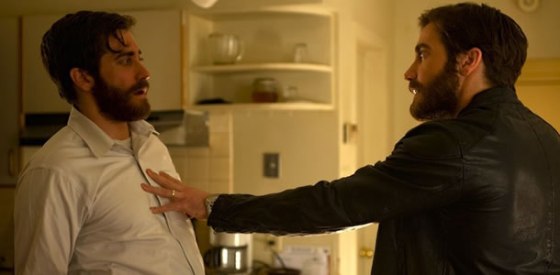


 AmateurCinephile.com