 Review by-Jarrett Leahy
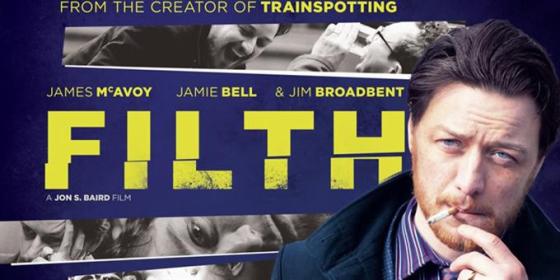
Bruce Robertson is a duplicitous, calculating, depraved police detective who desperately covets a prized promotion to Detective Inspector, for he believes it will help him get his estranged wife and daughter back. When Robertson is assigned to lead the investigation of the ruthless murder of a Japanese student, he gleefully sees this as the perfect opportunity to get a leg up on his fellow colleagues. Unfortunately for Robertson, his chances for advancement are put in jeopardy as he begins to experience vivid hallucinations that are becoming increasingly more frequent. As Robertson slips deeper into his own personal madness, everyone around him is put at risk of becoming collateral damage.
 Now having a few days to reflect and digest what this film tried to feed me, I have to say Filth is a rather fitting title for James McAvoy’s latest effort. Other possible titles I imagine considered might have been Atrocious, Sordid, Ill-Advised, Awful, or, in honor of the film’s Scottish routes, it could have simply been titled Shite. I pride myself in being an exceedingly open-minded film enthusiast when it comes to cinema that deviates from the norm. I have little problem admitting there are going to be films in the future that some may find my praise of to be questionable. Filth, however, in its contrived attempt to be a shockingly aberrant black comedy, has instead sold its soul to the satanic gods of cinema, creating a truly miserable viewing experience.
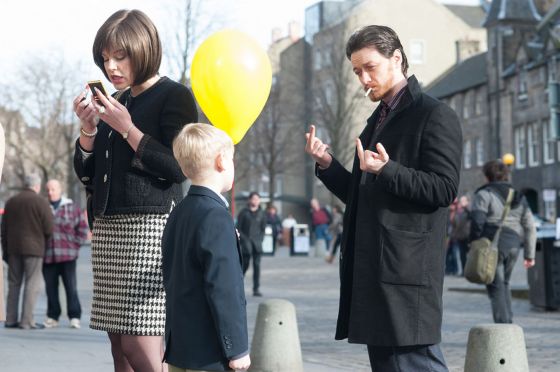
 If there is anything…praiseworthy about Filth, I will concede that James McAvoy is determinedly committed to the vile madness of his character. In Detective Robertson’s attempt to sabotage his co-workers from receiving the highly sought after promotion, McAvoy offers realistically disturbing depictions of erotic asphyxiation with one colleague’s wife, making sexually harassing phone calls to another’s wife, and turning everyone in the office against each other by airing dirty laundry. Throw in blackmailing a teenager for fellatio, cocaine-fueled threesomes, and a myriad of harsh incidents involving bullying those around him, and you can see that this is quite the guy.
 It was so difficult to watch a lot of really talented actors getting dragged through the mud by this unhinged bilge of a film. With a screenplay based on the Irvine Welsh novel of the same name, Filth is the second feature film for writer/director Jon S. Baird. Once subjected to the film’s feeble attempt at depicting Robertson’s descent into madness, Baird’s lack of filmmaking experience becomes glaringly obvious as it quickly turns from manically fascinating to distastefully loathsome. Baird’s “shocking” twist ending was also predictably uninspired and anticlimactic.
Filth is awful in ways unimaginable. I really don’t enjoy writing “F” reviews. It means I’ve been subjected to a painful cinema experience and also puts a type of target on my back as people who disagree with my evaluation find it free rein to tell me so, sometimes in graphic detail. But I can’t sugarcoat my honest reaction to a film I truly find to be beyond mediocre, and ironically, no recent film title is more suitable. Filth is a revolting attempt at black-humored debauchery that has become the early front runner for Steamer of the Year. I sincerely hope there’s no film in 2014 that is dreadful enough to dethrone it.-JL
 Review by-Jarrett Leahy
 With an amusing examination of the unintended consequences and burgeoning marketing possibilities of social media, Chef has an unexpected relevancy to the pertinent topic of the ever-expanding invasion technology continues to have on our daily lives. Like a 21st-century version of the comment bubble, we get an entertaining peek at the comedically inappropriate exchange during a blossoming twitter war that only fuels Casper’s eventual eruptive meltdown.
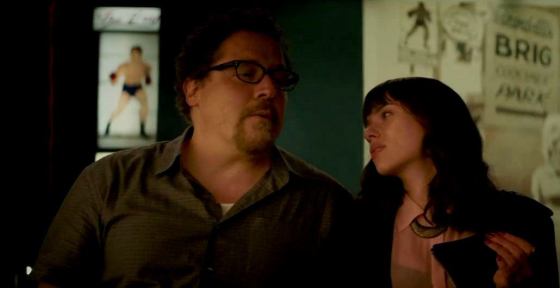 Taking advantage of his powerful Hollywood connections, Favreau the filmmaker persuaded some of the biggest superstars in the industry to offer their immense talents to smaller, supporting characters. It was actually quite refreshing to see the likes of Scarlett Johansson, Robert Downey Jr., and Dustin Hoffman bring their own unique bravado to less heralded roles than you would normally see them in. Surprisingly though, it is the loquacious veteran actor John Leguizamo, playing Carl’s humorous sous-chef Martin, that provides the film’s most gifted supporting performance. Best recognized for his sharp, biting tongue, Legquizamo, in one of the finest performances of his already underrated career, offers a surprisingly toned down portrayal that never overshadows Favreau but exhibits just the right amount of humorous verbosity to perfectly complement the performance of the film’s unlikely hero.
 One of the obvious star attractions of a film highlighting the culinary arts is the profusion of decadent and savory foods. Seared steaks, glazed and sauteed calamari, an abundant assortment of creamy, drizzled sauces, even a simple grilled cheese is transformed into mouth-watering gourmet fare. It was reported that Favreau trained with famed food truck chef Roy Choi in order to perform all his own cooking in the film. This undeniable commitment to the role is visible throughout as his command of the kitchen jargon along with his expert chopping and cooking techniques had me convinced he was a true culinary authority. Jon Favreau’s sincere and exuberant adoration for this project and its subject matter oozes out of every scene. And it is that infectious passion that resonates so well with audiences, making Chef a charismatic crowd pleaser.-JL
 Review by-Jarrett Leahy
 After splashing onto the Hollywood scene with his 1995 crime thriller, The Usual Suspects, director Bryan Singer was tabbed to create the first two films of the original trilogy, X-Men (2000) and X-2 (2003). Since then, a string of mediocre pictures that included the botched 2006 Superman reboot, Superman Returns, seemed to derail what looked to be a promising career. After Matthew Vaughn, the director of First Class, dropped out of Days of Future Past back in 2012, Singer was asked to return to the X-Men director’s chair to helm this latest installment. This choice by Fox Studios looks to be a genius decision, as Singer appears to be back on top of his game.
 Days of Future Past flawlessly entwines the narrative already established in the previous films with this new plot, interweaving the entire franchise together. This melding of storylines also offers Singer a tremendous assemblage of acting talent to play with. I dare say you’d be hard pressed to find a better cast ensemble in 2014 than that offered here. Hugh Jackman, Sir Ian McKellen, Patrick Stewart, Halle Berry, Ellen Page along with other stars from the previous trilogy are combined with the current trilogy stars Jennifer Lawrence, Michael Fassbender, James McAvoy, and Nicholas Hoult to form a true all-star gathering. While it was clear the previous cast had no problem slipping right back into their well established roles, it felt to me that Fassbender, McAvoy and especially Lawrence looked much more comfortable in their characters’ skin this second time around.
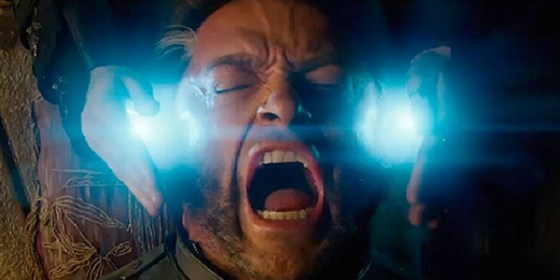 Time travel can be a precarious plot device if not done properly. Days of Future Past skillfully sidesteps many of those dreaded pitfalls by their use of Kitty Pryde’s (Ellen Page) ability to send a person’s consciousness back in time while the person’s physical body remains in the present in a type of suspended animation. This gift allows for one of the most impressive scenes of the entire film, as the younger Charles played by James McAvoy, channels through Logan (and Kitty) to send his consciousness forward in time to converse with his future self played by Patrick Stewart. As I looked upon this interaction between McAvoy and Stewart, I truly felt as if I were witnessing the next great scene in sci-fi movie lore.
 In 2011, after three films and a Wolverine spinoff, Fox Studios and Marvel Entertainment decided to reboot the series with the prequel X-Men: First Class because their X-Men franchise was too valuable to let die. Looking back at some of the comments I wrote about First Class, the remark that best summarized my feelings toward the film was, “by far the worst of the X-Men series. A ridiculously over the top film with a musical score to match.” My disappointment in the film back then was only fueled by what seemed to be everyone else’s adoration of it. I share this with you as a backdrop for my viewing of X-Men: Days of Future Past, which I found to be a superb, first-rate action film that surpassed all my expectations. With a tense, skillfully crafted, action-packed script and a cast of gifted A-list actors to boot, X-Men: Days of Future Past threw down the gauntlet to any film that hopes to be called the best blockbuster of 2014.-JL
 Review by-Jarrett Leahy
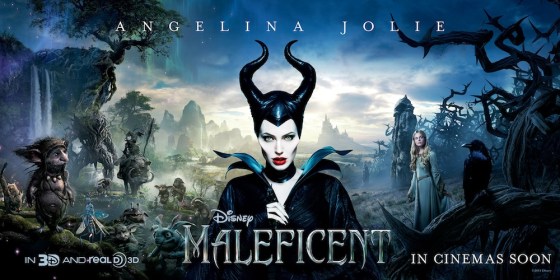
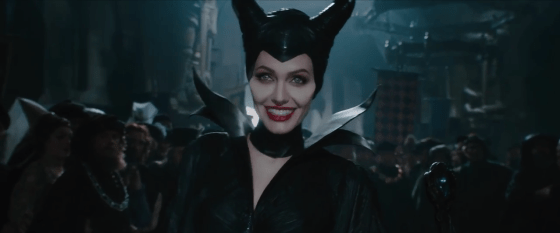 Angelina Jolie, the film’s obvious star attraction, has been such an enigma to me over the years. Ever since winning her Best Supporting Actress Oscar back in 1999 for her twisted performance in Girl, Interrupted, it’s felt like more often than not her obvious talents have been slightly misspent on a deluge of disposable action spectacles that are rightfully forgotten mere months after hitting theaters. How, you may ask, can I then turn around and praise a performance of hers in a movie that too will probably be forgotten before the year is out? Well, simply put, because her portrayal of Maleficent is a truly enamoring and transfixing performance and an affirmation at least to me that she is still a gifted actress and not just a “movie star.” From the moment vengeance overtakes Maleficent’s heart, Jolie, with the aid of perfectly designed prosthetic cheeks, truly owns and embodies the character. Her cold yet affecting stare exhibits the pain and fury of a betrayed soul and sends chills down your spine. Anytime she is on screen, she turns what could have been a mess of a film into a dark, engrossing fantasy that enchants throughout. I may be going out on the limb with this, but if 2014 turns out to be a down year for lead actress performances, I could see Jolie being a dark horse for a Best Actress nomination.
 The lovely Elle Fanning was charged with playing the film’s adolescent Sleeping Beauty character Aurora. Glancing over a few other reviews of the film, I noticed some expressed distinct umbrage with her portrayal. Sometimes I think even the most ardent of movie goers (i.e. critics) forget that these actors are playing a character, with specific personality traits and mannerisms. Aurora is your quintessential Disney princess, and as you know, fairytale princesses of the past have generally not been known for their brains or complex personalities. Adding to the character’s perceived timidity is in this retelling of the fairytale, Aurora is a supporting role, not the titled character. Sweet, innocent, sheltered, naive are all characteristics Fanning displays adeptly. And it is that true innocence that Fanning so delicately exhibits that begins to sway Maleficent’s compassion.
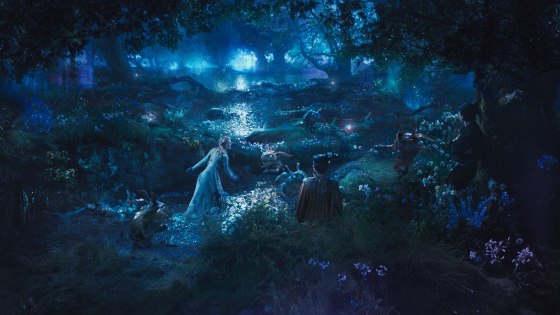 Maleficent toes the line between adult entertainment and not abandoning its childhood roots. The film’s CGI is overtly present, permeating nearly every scene of the film. While in the past I have admittedly had issue with other films using so many computer generated images, surprisingly here I found it aided in the story’s enchanting and magical feel along with bringing to life many of the Moors mystical inhabitants. Aerial shots are colorfully vivid, and the film’s battle scenes, while feeling a bit recycled from previous adventure films, are still hair-raising thanks to the otherworldly monster-like creatures conjured right out of the earth. Unexpected humor also imbues Maleficent. Imelda Staunton, Lesley Manville, and Juno Temple, the three bumbling pixies assigned to guard the infant Aurora have a screwball gregariousness that adds a lighthearted reprieve from the film’s darker moments. Amusing chemistry is also shared between Jolie and Sam Reilly, who plays Maleficent’s trusted servant Diaval.
 Entrusting the film’s entire background story to an unknown and untested young actor with only two television credits can be a risky proposition, which made Isobelle Molloy’s surprisingly capable and self-assured portrayal of the young Maleficent during the opening scenes all the more impressive. Molley is definitely a name we should keep an eye out for down the road in future roles.
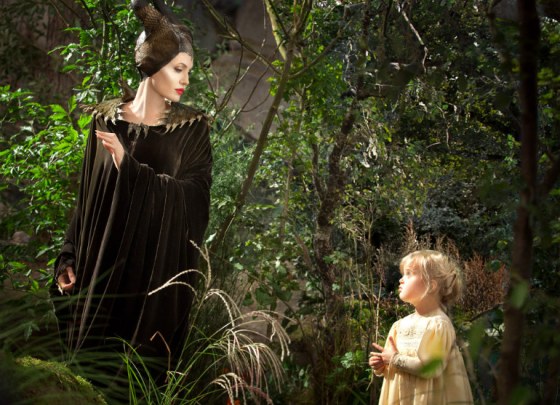
 Another young actress to make her big-screen debut is Angelina’s daughter Vivienne Jolie-Pitt. Vivienne was cast to play Aurora at age 5 because it was reported that she was the only young child during auditions who didn’t run away from Jolie when she was in full make-up. While their onscreen time together is but only a few short-lived minutes, their characters’ charming interaction offered one of the film’s lighter moments.
 Maleficent offers the perfect outlet to show off just how impressive Angelina Jolie can be when given the right part. While there’s nothing groundbreaking about the film, I can report that Maleficent is an enchanting cinema escape that will entertain both its younger viewers and those older ones looking to rekindle their love for a Disney classic.-JL
 List by-Jarrett Leahy


 AmateurCinephile.com