 Review by-Jarrett Leahy
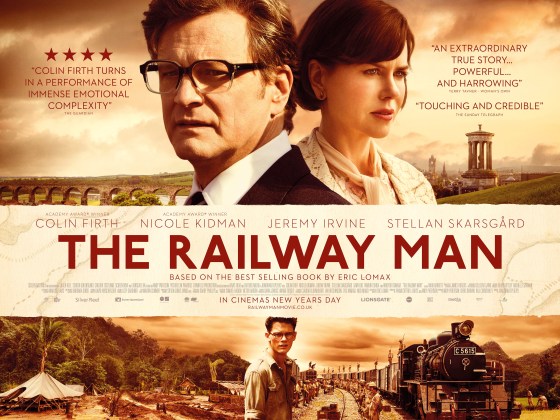
Eric Lomax, a former British World War II officer, has spent his time after the war desperately trying to overcome the horrors inflicted on him by his Japanese captors while a prisoner of war. After a chance encounter with a beautiful woman, Eric is given a sliver of hope to escape his inner turmoil, but painfully slips back into his psychological nightmare. When one his close friends, a P.O.W. survivor himself, informs Lomax that the man accountable for their horrific treatment is still alive, Eric sets out to accost his long lost tormentor. Based on the Lomax penned autobiography of the same name and starring Academy Award winners Colin Firth and Nicole Kidman, The Railway Man is a tense and impactful P.O.W. story with a touching message of forgiveness that sadly has been all but ignored by most the cinema world since its April 11th limited release here in the States.
Similar to the subject matter of the famed The Bridge On The River Kwai, The Railway Man is a depiction of the suicidal undertaking of building the Burma Railway, or Death Railway as it became known, through the mountainous jungles of Japan. While admittedly a canonized classic, there’s always been something slightly off-putting about David Lean’s classic P.O.W. epic for me that I just couldn’t quite put my finger on until I saw The Railway Man last night. River Kwai tried too hard to make things feel almost…cheery. I have little doubt that the soldiers who were forced into that awful situation shared a type of national bond or camaraderie, but the overall jovial nature of the film with the whistling and comic relief has always been something I’ve found slightly disingenuous. In comparison, The Railway Man, even in its restraint in depicting the truly gruesome, gave a much more realistically horrific portrayal of what these men were subjected to while being forced to build this impossible railway.
 The lead role duties are split between Colin Firth, who plays Lomax in his later years, and Jeremy Irvine, who portrays the younger Lomax during his WWII service. Irvine, a young British actor, first made a name for himself with his breakout performance in Steven Spielberg’s 2011 wartime drama, War Horse. Here he is entrusted with the difficult task of portraying the victim of the torturous practices the Japanese Imperial Army inflicted on captured British soldiers interned deep in the remote Pacific jungle during the war. The film utilizes the familiar technique of flashback storytelling, putting Irvine’s performance in constant comparison with that given by Firth. As a testament to the young actor’s abilities, never did I feel as if his portrayal was of lesser quality than that of his more accomplished counterpart. Irvine adeptly mirrors the character’s mannerisms established by Firth’s portrayal while still bringing his own personal interpretations of the effects these horrific acts had on Lieutenant Lomax.
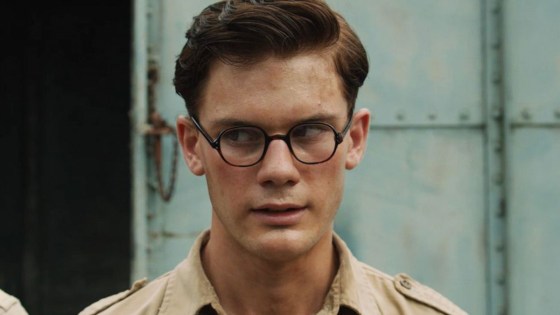 Colin Firth, on the other hand, was asked to portray the silent, painful aftermath of this traumatic event in Eric Lomax’s life. As the circumstances surrounding his incarceration are revealed, it becomes a wonderment that this man is still functioning in regular society at all. Through the expert use of a distant, steely yet affecting gaze, Firth skillfully captures and projects the inner tumult eating away at this kind-hearted man who is still haunted by memories and vivid flashbacks decades later. The woman given credit for helping Lomax through these difficult times is his second wife Patti. It’s reported that Firth personally asked Nicole Kidman to step in and play the part of Patti when Rachel Weisz, who was originally cast, had to drop out of the project due to scheduling conflicts. Through a subdued, almost muted appearance, Kidman offers a sober, steadfast performance that gracefully complements Firth’s.
 Cinematographer Gary Phillips’ exquisite use of the camera captured some extremely striking images. One particular scene that truly caught my eye was the nighttime arrival of Lomax’s recently captured battalion. Starting out of focus and slowly sharpening in on the faint candlelight illuminating the frightful work site filled with ghastly workers, we quickly discover these troops have been condemned to unfathomable living conditions.
 If there is one fault I could point to, the filmmakers did take creative liberties with a revenge aspect of the story in comparison to the real events on which the film is based, but this choice ultimately adds an extra level of tension and intrigue. Scouring the top critics’ reviews, I noticed a few had complaints that the film was almost too safe in its representation of the atrocities imposed upon these brave soldiers. Personally, I think it’s a shame that if a film decides to show even the slightest bit of restraint in its depiction of wartime crimes, it is labeled by some as old-fashioned. Don’t misunderstand me, the torture scenes depicted are difficult to watch; however my appreciation for the filmmaker’s restraint lies in the fact that I can still recommend this moving and important true story to movie fans that are squeamish to ultra violence.
With it being Memorial Day weekend, I found it almost fitting that I got the opportunity to experience this gripping, inspiring story of our past. I just hope The Weinstein Company, the film’s U.S. distributor, will throw a little more of its backing behind The Railway Man so that more people can learn and share in this film’s important lessons about humanity and forgiveness.-JL
 Review by-Jarrett Leahy
 Godzilla starts off promisingly ominous. For those unaware of the background story, the film explains it this way. These creatures are remnants of millions of years ago, when the earth was much more radioactive. With radiation being the creatures’ main source of food, as the earth was becoming less radioactive, the creatures began hibernating deep in the oceans or underground, so they could survive by absorbing the earth’s natural radiation. In the opening credits, the movie suggests that the infamous Bikini Atoll nuclear bomb tests off the Asian coast back in the 1954 were in fact the cause of the initial appearance of the Godzilla from the depths of the oceans. The film then jumps to 1999, where a strip mining company in the Philippines is culpable for disturbing two unidentifiable pod like eggs deep underground, with evidence that one has already hatched and its inhabitant has escaped into the nearby ocean.
 Mysterious and unidentified seismic activity causes a cataclysmic destruction of a Japanese nuclear power-plant. Unfortunately, this accident takes out one of the film’s most gifted actors within the first fifteen minutes. After the impetuous death of yet another the film’s stars, the fate of the entire film is left in the hands of Aaron Taylor-Johnson and Elizabeth Olsen. Johnson of Kick Ass fame has had a modestly creditable start to his career, with respectable performances in Nowhere Boy, Savages, and Anna Karenina, and Olsen has been riding her 2011 critically praised Martha Marcy May Marlene performance all the way to the bank recently. Unfortunately, in this film these two just don’t have the chops to carry this behemoth of a blockbuster. As an onscreen couple, if I may borrow a line from the film Meet Joe Black, “this relationship has all the passion of a pair of titmice.” The best facial expression of anxiety or fear Johnson could muster up looked more like he was in the presence of a pungent aroma only he was privy to. And Olsen unfortunately is relegated to the “wife left behind” character whose lasting contribution to the film winds up being the stereotypical gaze to the heavens in horror face that has now become all too cliched in these type of disaster films.
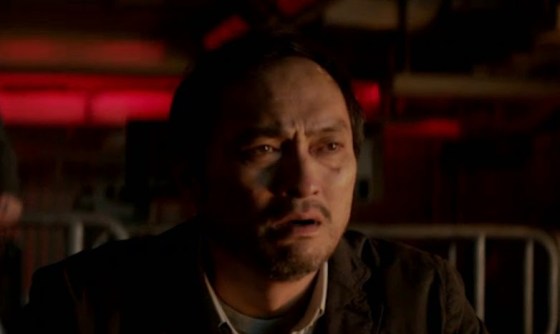
 The supporting cast looks great on paper, with names like Ken Watanabe, David Strathairn, and Sally Hawkins gracing the screen with their talented presence. Unfortunately, thanks to film’s disposable script, that’s about all they were asked to do. Watanabe’s face was stuck in perplexed confusion mode for the entirety of the film (see picture below). Hawkins, who was just nominated for a Best Supporting Actress Oscar for her breakout role in Woody Allen’s Blue Jasmine was nothing more than a glorified gopher assistant to Watanabe, and the military unit they gave Strathairn to lead felt like some scrounged up, last minute, amateur hour casting call.
 Godzilla isn’t bad, but unfortunately it isn’t all that great either. Director Gareth Edwards adeptly utilizes today’s CGI technology to create terrifyingly realistic looking monsters. His M.U.T.O.s, or winged, insectoid like creatures are fiercely arresting, and Godzilla’s formidable depiction and deafening scream alone gave me chills. However for a film entitled Godzilla, it was…a bit unexpected to see how little screen time he was actually given compared to his grotesque counterparts. While the battle scenes between these ancient creatures initially caused a pulse raising, dreaded wonderment, the awe unfortunately wore off. After such impressive build up, this version of Godzilla, while markedly better than the dreadful 1998 Rolland Emmerich version, still turned out to be yet another run-of-the-mill disaster “blockbuster.”-JL
 Review by-Jarrett Leahy
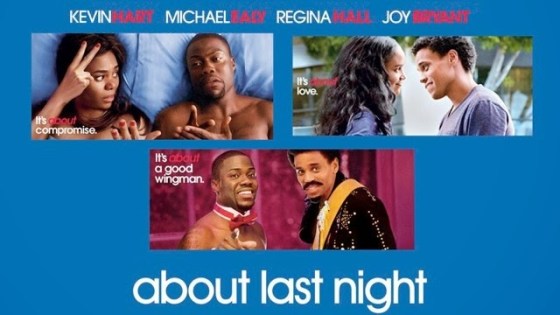
 About Last Night was unexpectedly naughtier than I had initially anticipated. Right from the opening credits, the film unabashedly took advantage of its R rating, unleashing a steady barrage of salacious adult talk and humor that added a jocular spice to the film. The principal contributor to the film’s comedic punch is Kevin Hart. After my relative distaste for Ride Along, I’m surprised to say I have now, within the last month, watched all three of Hart’s latest efforts, and About Last Night is the best of the bunch. Calling Hart’s comedic style manic would be a friendly understatement. Like many of his previous efforts, his delivery in About Last Night is equal parts energetically mouthy and verbosely raunchy. His hyper-adult style can rub some raw, but I must humbly admit he had me snickering for most of the movie.
 I never thought there’d be a day when an actress/comedienne could offer a performance that matched Hart’s hopped up ferocity, so I must tip my hat to Regina Hall and her nutty portrayal of Joan. Hart’s Bernie and Hall’s Joan embark on an exceedingly irregular liaison filled with heated arguments and outlandish intimate moments. Stealing the show with one comically drunken insult after another, Hart and Hall’s combined demented chemistry (think Vince Vaughn and Isla Fisher in Wedding Crashers) offers a frenzied humor that I just couldn’t stop laughing at.
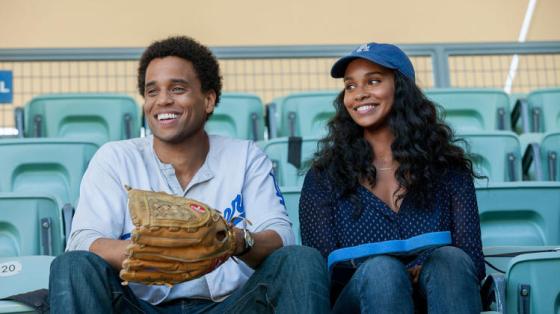 Balancing out the amusing chaos of the Bernie and Joan show is the sweet and comparatively bland storyline of Danny and Debbie. While their story arc follows the more conventional trappings of the rom-com genre, Michael Ealy and Joy Bryant both bring a playful tenderheartedness to their characters that help make up for their story’s familiarity. We genuinely like them together as a couple, we root for them to stay together, and feel for them when things don’t go as planned.
 Review by-Jarrett Leahy
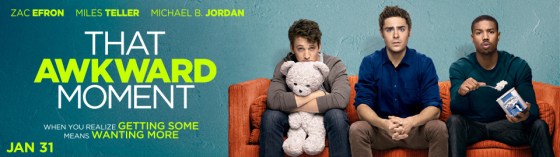
 Because of his obnoxious good looks and his initial rise to fame starring in the bubble gum High School Musical franchise, some have been slow to give Efron credit for possessing actual talent as an actor. Personally, he first won me over with his charming portrayal of a wide-eyed high-school student eager to make it as a stage actor in Richard Linklater’s Me and Orson Welles. In That Awkward Moment, Efron teams up with the equally gifted Miles Teller playing book cover designers. Efron and Teller are a devilishly gifted comedic duo whose back and forth chemistry reminded me of a young Owen Wilson and Vince Vaughn. The scene they’ll probably most be remembered for is a…horizontal phone conversation that I won’t spoil; you’ll have to experience it for yourself. I hope they’ll get the chance to team up together again.
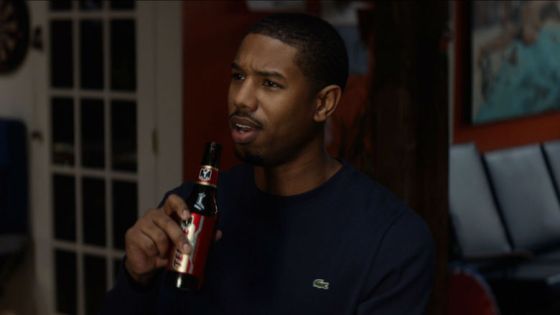 If there had to be a weak link in this trio, that dubious distinction would unfortunately have to be bestowed upon Michael B. Jordan. Jordan set the indie world on fire last year with his surprisingly accomplished portrait of the late Oscar Grant in the moving biopic drama, Fruitvale Station. While I was glad to see Jordan back on screen, perhaps comedy isn’t quite his genre of expertise. Whether it be the reserved personality of the character he was cast as or the fact he just doesn’t have the same comedic wit and timing that his co-stars are so glaringly blessed with, there were times when it felt as if Jordan was simply standing there as Efron and Teller were doing comedic laps around him. Saying that, Jordan’s Mikey does bring the emotional core and voice of reason to the trio.
 Imogen Poots offers yet another provocatively alluring performance. Who is Imogen Poots? She is an extremely talented twenty-something British actress who has been making the rounds as the sultry supporting type in a handful of independent films and romantic comedies, most notably in Solitary Man with Michael Douglas and A Late Quartet starring the late Philip Seymour Hoffman. Here, playing Zac Efron’s love interest, Ellie, she more than holds her own when sharing scenes with the boys, and there is instant electrifying attraction shared between her and Efron right from the first moment he catches a glimpse of her at the bar. With her obvious talents, I foresee it won’t be long before we’ll be watching Imogen in roles that would normally be given to the likes of Emma Stone or Jennifer Lawrence.
 During it’s initial release, That Awkward Moment got all but crapped on by many of the leading critics. Now seeing it twice within the last three days I just don’t understand all the hostility. Admittedly it has comedic moments that some may find a bit rude and crude and not all the film’s storylines work perfectly. But more than anything there is a genuine sincerity and affection shared between this cast of characters that shines throughout. Efron and Teller’s charmingly droll and spontaneous comedic chemistry was a boisterous treat, and Poots and Efron truly sizzle on screen together. You can call me crazy, but I found That Awkward Moment to be a raunchy rom-com with surprising soul.-JL
 List by-Jarrett Leahy



 AmateurCinephile.com